 Septic Tank Solutions
Septic guides
Septic tank maintenance for storm season: what heavy rain does and what to check
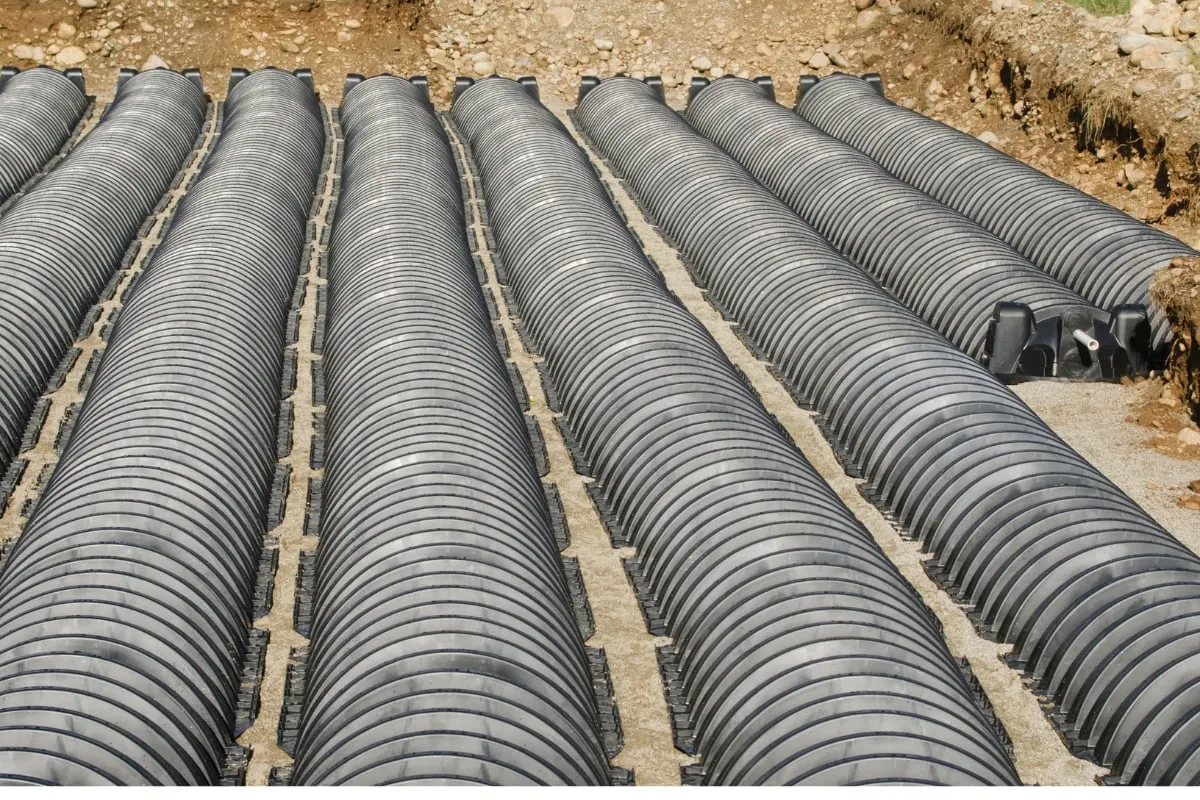
Heavy rain rarely breaks a septic tank on its own, but it waterlogs the ground your system drains into, so the best time to check it is now, while the soil is still firm.
Storm season has started, and the first part of your septic system that heavy rain tests is not the tank. It's the ground around it.
When the soil over your absorption trench fills with water, the liquid leaving your tank has nowhere to go. The trouble usually shows up in the days after a storm, not during it: slow drains, gurgling pipes, soggy patches on the lawn, a smell you didn't have last week.
So the useful septic tank maintenance happens now, while the ground is still firm. And if your tank ever ends up sitting in flooded ground, don't rush to have it pumped out. That can do more harm than good.
Storm season has already started
- NSW storm season (NSW SES), September to April. Note: major storms can happen at any time of year. Source: NSW SES Storm Guide (PDF)
- Typical severe weather months across Australia (DTN), October to April. Source: DTN, severe weather season starts in Australia
In New South Wales, storm season falls between September and April, and major storms can happen at any time of the year, according to the NSW SES. Across Australia more broadly, severe weather such as thunderstorms, flooding and tropical cyclones typically arrives from October through April.
Those months aren't a rule for every state. Your local emergency service sets the picture where you live. The pattern is broadly the same, though: from spring into autumn, expect the heaviest downpours of the year.
What heavy rain does to a septic system
Dry spell
After heavy rain
Source: US EPA
A conventional septic system works in two stages. The tank holds wastewater long enough for solids to settle. The liquid then flows out to an absorption trench, sometimes called a land application area, where the soil soaks it up and treats it. If you'd like the detail, our guide to how absorption trenches work walks through it.
That second stage depends entirely on the soil having room. Dry soil is full of tiny air gaps. After days of heavy rain, those gaps are full of water. The trench can't drain, effluent backs up toward the tank, and the tank backs up toward the house.
US guidance describes the same problem. The US EPA says that if the soil over the drainfield (the American name for an absorption trench) is saturated and flooded, the wastewater will not be treated.
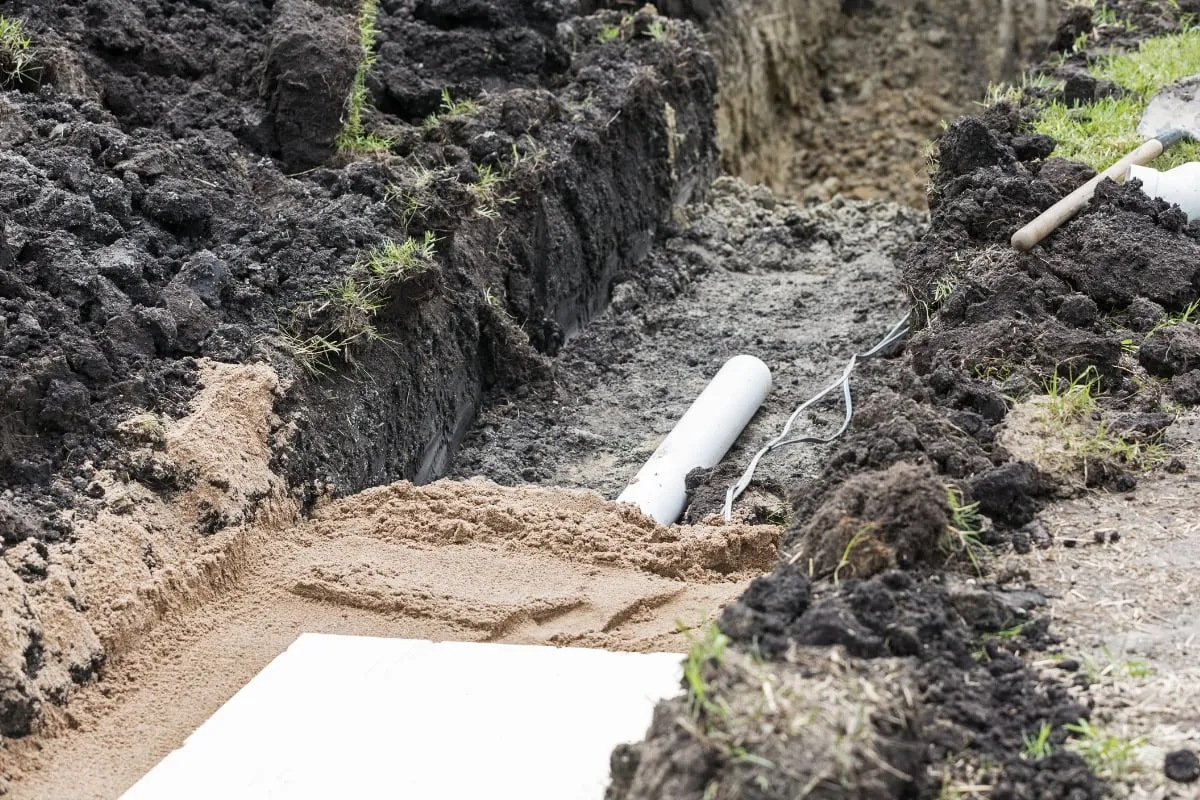
This is why storm damage to a septic system so often looks like something else. The signs that follow a storm are:
- sinks, showers and toilets draining slowly
- gurgling in the pipes
- wet, spongy or unusually green patches over the trench
- sewage odour in the yard or near the tank
Some of these clear as the ground dries. If they don't, or they keep coming back, something may be damaged. Our guide on how to spot and fix septic tank leaks covers what to look for next.
Why pumping out a flooded tank can make things worse
Full tank
Pumped empty
Pumping a tank in saturated ground can let it float and damage the pipes. Get professional advice first.
Source: Buloke Shire Council; US EPA
It feels logical. The system is backing up, so empty the tank. When the ground is waterlogged, that can backfire.
A tank full of liquid is heavy, and its weight holds it in place. Empty it, and the groundwater pressing up from below can be stronger than the tank's own weight.
Cleaning or pumping out a flooded septic tank should be done with care as this could cause the tank to float out of the ground and damage the structure.
Buloke Shire Council in Victoria puts it plainly: pumping out a flooded septic tank "could cause the tank to float out of the ground and damage the structure". The US Environmental Protection Agency describes the same mechanism, warning that pumping while the drainfield is saturated may damage the inlet and outlet pipes as the tank tries to lift.
This isn't a DIY judgement call. If your tank is sitting in flooded ground, cut back water use and get a professional to look at it before anyone connects a hose.
What this spring's outlook means for your system
| Region (BOM outlook issued 24 September 2026) | Rainfall outlook | What to watch in a septic system |
|---|---|---|
| Much of the west and central regions | Above-average rainfall likely | Saturated absorption trenches, pooling, slow drains after storms; act sooner |
| The south-east | Below-average rainfall likely | Dry, cracking soil, tree roots seeking moisture near pipes; storms can still hit |
| Much of eastern Australia, October to December | Roughly equal chances of above or below average rainfall | Check your system before the season builds, not in the middle of a downpour. |
| Most of Australia: warmer-than-average days and nights likely. | ||
Source: Bureau of Meteorology
The Bureau of Meteorology's long-range outlook, issued 24 September 2026, reads: "Above average rainfall likely across much of the west and central regions, below average in the south-east; warmer than average days and nights likely for most of Australia."
For the Central Coast and the Hunter, where we work, the signal is mixed. The Bureau gives roughly equal chances of above or below average rainfall for much of eastern Australia from October to December, with a drier signal for October alone across much of south-east Australia. Outlooks are probabilities, not promises, and the Bureau updates them regularly. Still, they're a fair guide to where to put your attention.
If the season turns wet, treat the early part of the season as your window. Saturated soil is the main risk, and it's much easier to sort out downpipes, access and any overdue work while the ground is dry enough to walk on.
If it stays dry, the problems are different. Clay soils crack and move as they dry, which can stress pipe joints. Tree roots go looking for moisture, and a septic line or trench is an obvious place to find it. And a dry season is not a storm-free one: major storms can happen at any time of year. A storm on hard, dry ground runs off fast, so where that runoff lands still matters.
Either way, the point is the same. Check your system before the season builds, not in the middle of a downpour.
A storm-season checklist for your septic system
Tick these off as you go
Eight things to look at before the season builds.
Most of this takes an afternoon and a torch.
- Send roof water somewhere else. Downpipes and stormwater should discharge well away from the tank and the absorption trench. Every litre of roof water that soaks into the trench is a litre of space your effluent can't use.
- Check your rainwater tank overflow. It's easy to forget, and it often points straight at the lawn.
- Keep vehicles and heavy loads off the trench. Cars, trailers, skips and stacked materials compact the soil and can crush pipes, and wet soil compacts even more easily.
- Find your tank lid and inspection points. Know where they are, clear any soil or plants off them, and make sure they can be reached. If someone needs to check the system in a hurry, this saves time.
- Find out when the tank was last pumped out. Check old invoices or ask the previous owner. More on this below.
- Spread out heavy water use in wet weeks. Run the washing machine across several days rather than doing five loads on Saturday, so the trench isn't hit with a surge when the soil is already full.
- Know the early warning signs. Slow drains, gurgling, wet patches and odour are covered in our leak signs guide.
- Have a plan for a flooded tank. If the tank ends up underwater or the ground stays saturated, don't pump it without professional advice, for the reasons Buloke Shire Council spells out.
Roof water carried right past the septic lid and the trench, out to a garden bed.
None of these steps guarantees your system comes through a big storm untouched. Together they give it the best chance of coping.
When was your tank last pumped out?
Storm season is a good prompt to check, because a tank that's already overdue has less capacity when the ground turns against it.
How often a tank needs pumping depends on its size, how many people live in the house and how the system is used. There isn't one number for every household. As a benchmark, Richmond Valley Council's 2017 on-site wastewater strategy says a septic tank will need pumping out on average every three to five years. Treat that as a guide rather than a deadline, and check what your own council expects.
If your records show it's been a while, or you can't find any records at all, arrange an inspection while the ground is still dry. That gives you options. Waiting until the tank is sitting in saturated soil may leave you with fewer. Our article on how often you should pump your septic tank goes further into what changes the timing.
Your next step
Work through the checklist this weekend: downpipes, access, and the date of your last pump-out. If anything on it gives you pause, whether that's a soggy strip on the lawn, a drain that's been slow since the last storm or a pump-out date nobody can find, talk to Septic Tank Solutions through the enquiry form. We'd much rather look at your system while the ground is firm than meet it for the first time in the middle of a wet February.
Sources
- NSW SES, Storm Guide: https://www.ses.nsw.gov.au/sites/default/files/document/storm-guide_0.pdf
- Bureau of Meteorology, Climate outlooks (issued 24 September 2026): https://www.bom.gov.au/climate/ahead/outlooks/
- DTN, Severe weather season starts in Australia: https://www.dtn.com/severe-weather-season-starts-in-australia
- Buloke Shire Council, Flood related health and safety information: https://www.buloke.vic.gov.au/flood-related-health-and-safety-information
- US Environmental Protection Agency, Septic systems: what to do after a flood: https://www.epa.gov/ground-water-and-drinking-water/septic-systems-what-do-after-flood
- Richmond Valley Council, On-Site Wastewater Management Strategy 2017: https://richmondvalley.nsw.gov.au/wp-content/uploads/2018/10/On-Site-Wastewater-Management-Strategy-2017-FINAL.pdf