 Septic Tank Solutions
Septic guides
Flooded septic tank: what to do after the water goes down
Keep every toilet, sink and appliance on a flooded septic system out of use until it has been checked, make the power safe, and have a licensed operator pump the tank only once no water is visible on the ground, because a flooded tank can float out when it is pumped.
What to do with a flooded septic tank, in order
After a flood: the order to follow
Make the power safe
electrical hazards first; treatment plants checked by a licensed electrician before power goes back on
Stop using the drains
no toilet use or flushing until tank and pipes are known to be intact
Wait until no water is visible on the ground surface
Licensed operator pumps out, then the tank is filled with water so it does not float
System checked before use (in WA, approved by the local government environmental health officer)
Advice from four Australian health, building and council sources lines up into one running order for a septic system after a flood. This is our synthesis of their advice, not one source's list:
- Make the power safe. Victoria's Better Health Channel says to deal with electrical hazards before you start cleaning. Queensland's building regulator wants a licensed electrician to check all electrical components before the power is turned on for treatment plants.
- Stop using the drains. Do not use or flush the toilet until you know the tank and pipes are intact.
- Wait for the ground to clear. WA Health says to pump out as soon as possible after flooding, when there is no visible water on the surface of the ground.
- Have the tank pumped, then refilled. A flooded tank can float out of the ground and damage its structure and pipes. That is why, after pumping, the tank is filled with water to stop it floating.
- Have it checked before it goes back into use. For a damaged system, WA Health says nothing connected to it should be used until it is professionally inspected and repaired, and approved for use by the local government environmental health officer.
Step three is the one people want to skip. Our view at Septic Tank Solutions is that the wait is part of the fix, not a delay to it.
The first 24 hours: what to stop, and what to start
First day after the water drops
The aim of the first day is to keep the problem outside the house and to keep people away from it.
- Electrics first. Get a licensed electrician, or switch off at the switchboard. Don't wade through water to reach the board.
- No flushing. Until the tank and pipes are known to be intact, wastewater can flow back into the house through the toilet, shower, bath and laundry drains.
- If the system is damaged, rest everything on it. WA Health says not to use toilets, laundry, kitchen or bathroom sinks or whitegoods connected to it until it has been inspected, repaired and approved.
- Flooded aerated system? WA Health's advice is: do not use a flooded AWTS, isolate the electrical connection and call a wastewater service technician immediately.
- Pumps: ask before switching off. Turning off pump power can stop flooded pumps overheating or pumping out untreated water, but sometimes the pump should stay on, so ask your service agent.
- Children and pets out. Keep children and pets away from sewage-affected areas until clean-up and disinfection are done.
- No vehicles on the disposal area. Saturated soil compacts easily, so keep cars and machinery off it.
- Ring the insurer. Queensland's regulator advises contacting your insurer as soon as possible after damage.
- Leave the tank to specialists. Only trained specialists should clean, repair or pump a septic system, because tanks may contain dangerous gases.
Signs of a flooded septic tank
Warning signs (Buloke Shire Council)
- 1pungent odour around the tank and land application area
- 2wastewater overflowing at the relief point
- 3high sludge level in the primary tank
- 4sewage coming up through toilets and sinks
Arrows
- floodwater entering through the toilet, other fixtures and the overflow relief gully grate
- solids washing out of the tank into the distribution pit and slotted pipes
Being underground helps. Most septic tanks should not be structurally damaged by flooding because they are below ground. The water still finds a way in, through the toilet, other fixtures or the overflow relief gully grate. Once inside, it can wash solids out of the tank and cause blockages further down the line.
Don't assume a below-ground tank came through fine: check for open covers or pits, ruptured or leaking systems and damaged or exposed pipes that may need capping or sealing.
The signs of failure to watch for:
- a pungent odour around the tank and the land application area
- blocked fixtures, or wastewater overflowing at the relief point
- high sludge levels in the primary tank
- sewage coming up through toilets and sinks.
If you suspect physical damage, call a licensed plumbing practitioner. For what cracked lids, damp patches and leaking joints look like, our guide on how to spot and fix septic tank leaks walks through them. Several of the flood signs overlap with the everyday signs your septic tank needs pumping.
When can a flooded septic tank be pumped out?
Soon, but not while the yard is still under water. Tanks inundated with water, silt and debris should be professionally cleaned as soon as possible after the water subsides. WA Health puts the trigger plainly: when there is no visible water on the surface of the ground, and by a licensed septic tank operator. Better Health adds a practical test: silt and debris come out as soon as it is safe for the vehicle to access the tank.
Pumping itself carries a risk. An emptied tank in saturated ground can float out of the ground and damage the structure and pipes. That is why it is filled with water again straight after pumping.
The tank may not be the only part that needs clearing. Wells, distribution pits and slotted pipes clogged with displaced solids may need pumping too.
Once the system is back to normal, routine timing is a different question, covered in how often to empty a septic tank.
Will a flooded septic tank fix itself?
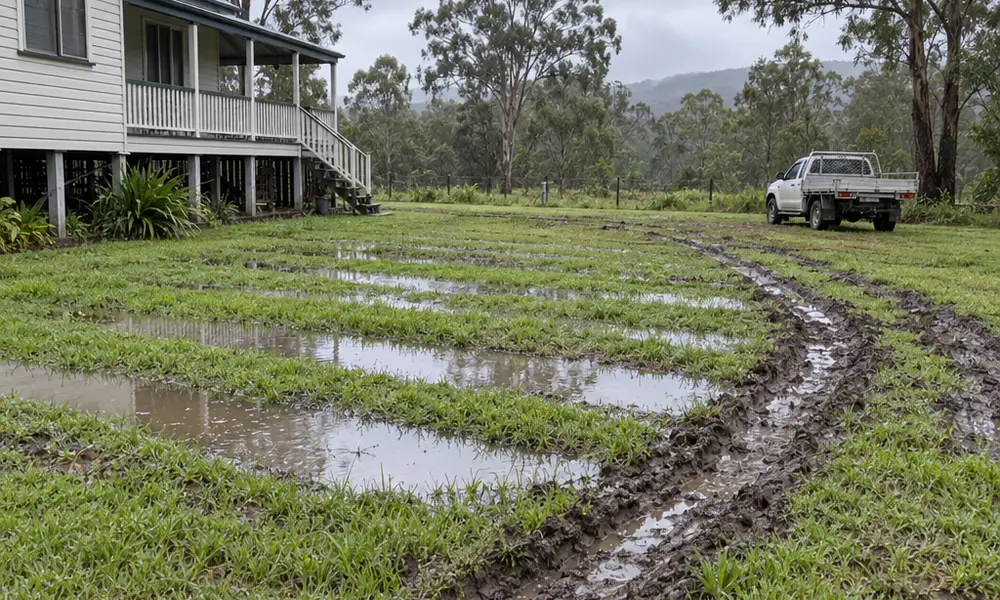
Illustration. A soggy disposal area after heavy rain, with water pooling over the trenches and tyre ruts across it.
Don't count on it, and the disposal area is usually why. When the ground is waterlogged or clogged, extra water will not be absorbed and will pool on the surface instead. Clearing that can mean pumping the whole system, possibly several times.
Then there is compaction. Saturated soil compacts easily, which can cause system failure, so a ute crossing the trenches while the ground is soft can do lasting harm. In extreme cases, the disposal area may need re-installing, and a licensed plumbing practitioner should assess it.
Pump-outs alone don't cure a failed trench. One NSW council's troubleshooting guide says that when water is flowing from the absorption trench, the trenches may need replacing, and desludging provides only a temporary solution.
For how trenches work, see understanding absorption trenches. If a replacement is on the cards, our piece on absorption trench rules in NSW and Queensland explains who approves the work.
Septic tank, aerated system or something else: who to call
The steps split by system. A conventional septic tank is mostly a question of whether the tank and pipes are intact. An aerated wastewater treatment system (AWTS) adds pumps, aerators and electrics, and pumps, aerators and filters can be damaged by flood or power loss. Not sure which one you have? See primary or secondary treatment systems.
| Situation | Who to call | What the guidance says | Source |
|---|---|---|---|
| Suspected damage to tank, pipes or disposal area | Licensed plumbing practitioner | If you suspect physical damage, call a licensed plumbing practitioner | Buloke Shire Council |
| Tank needs pumping | Licensed septic tank operator | When there is no visible water on the surface of the ground | WA Health |
| Flooded aerated system (AWTS) | Wastewater service technician | Isolate the electrical connection and call a wastewater service technician immediately | WA Health |
| Treatment plant electrics (Queensland) | Licensed electrician | Check all electrical components before the power is turned on | QBCC |
| Pump: on or off? | Your service agent | Sometimes the pump should stay on | Buloke Shire Council |
| Worm farm, composting toilet or other approved system | The manufacturer | Contact the manufacturer for flood and power-outage advice | Buloke Shire Council |
| Damaged system going back into use (WA) | Local government environmental health officer | Approved for use by the local government environmental health officer | WA Health |
| Damage claim (Queensland advice) | Your insurer | Contact your insurer as soon as possible | QBCC |
Who signs off afterwards depends on where you live. In Victoria, for example, a system must be operated and maintained under your council septic permit and the EPA Victoria Certificate of Approval. Other states run it differently, so check with your own council before the system goes back into full use.
Cleaning up where sewage came inside
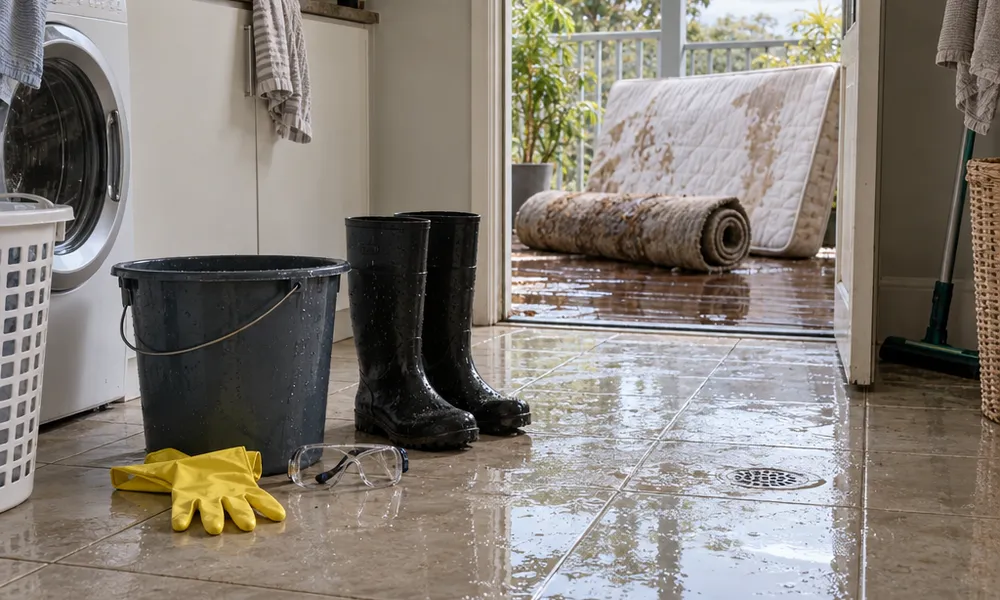
Illustration. A hosed-down laundry floor with cleaning gear, and soiled soft furnishings set out to go.
Disinfecting after sewage
1 cup household chlorine bleach plus 10 litres cold water
Leave wet 10 minutes, then rinse with clean water
Electrical hazards first. Gloves, boots, eye protection. Discard carpet, mattresses and soft toys that cannot be cleaned.
Source: Better Health Channel
Treat it as a health job, not a tidy-up. Sewage contains bacteria, viruses and protozoa that can cause gastroenteritis, so wear rubber gloves, boots and eye protection.
- Mix: one cup of household chlorine bleach in 10 litres of cold water. For a smaller job, half a cup in 5 litres keeps the same ratio (our estimate, simply halving both amounts).
- Wait: on hard surfaces, leave the chlorine solution wet for 10 minutes, then rinse with clean water.
- Let go: discard carpet, mattresses and soft toys that cannot be cleaned.
- Water: if a private water supply may be contaminated, use bottled or boiled water for non-drinking uses such as washing dishes and brushing teeth.
Why a flood plan is worth having this summer
Rainfall outlook, November to January (issued 22 October 2026)
- Above average likely: 60% to greater than 80% chance
- Below average likely
Source: Bureau of Meteorology
The Bureau of Meteorology's outlook for November to January gives a 60% to over 80% chance of above-average rainfall across southern Queensland, north-eastern NSW, most of South Australia and southern and central WA. The same outlook says the wet signal "strengthens in the east during December". Below-average rain is the more likely outcome for Tasmania, parts of southern Victoria and the tropical far north.
A strong El Niño is under way, but the Bureau notes this does not necessarily mean strong impacts on Australia's rainfall. An outlook is odds, not a forecast. For prevention before the rain arrives, our storm-season maintenance guide covers what heavy rain does to a system and what to check.
The checked figures and steps in one place
No toilet use or flushing until tank and pipes are known to be intact
Pump out when there is no visible water on the surface of the ground
After pumping, fill the tank with water to stop it floating
Keep vehicles and equipment off the disposal area
1 cup household chlorine bleach per 10 litres of cold water, leave wet 10 minutes, then rinse
60% to greater than 80% chance of above-average rain, November to January, southern Qld and north-eastern NSW
Your next step after a flood
If water has been over your tank, your relief gully or your disposal area, start with the order above. Keep the drains out of use, make the power safe, and have a licensed operator pump the tank once no water is visible on the ground.
Then get the details to Septic Tank Solutions through our contact page. Tell us what system you have, how high the water came and which of the warning signs you are seeing. Pass the same details to your insurer and, where your state requires it, your council.
Sources
- https://www.buloke.vic.gov.au/flood-related-health-and-safety-information
- https://www.healthywa.health.wa.gov.au/Articles/F_I/Flood-damaged-on-site-wastewater-systems
- https://www.qbcc.qld.gov.au/news/using-water-gas-flood-cyclonic-affected-areas
- https://www.betterhealth.vic.gov.au/health/healthyliving/sewage-overflows-at-home
- https://www.northernbeaches.nsw.gov.au/community/safety-and-wellbeing/public-health/on-site-sewage-systems
- https://www.bom.gov.au/climate/ahead/outlooks/
Pictures in this guide are illustrations, not photos of our jobs.